
The difference between direct and indirect marketing
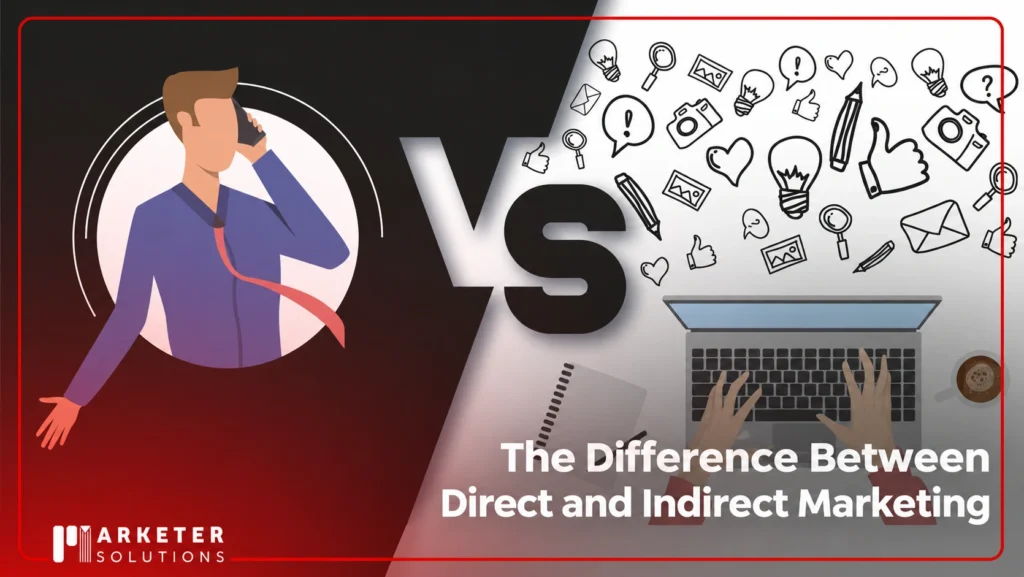
Understanding the difference between direct and indirect marketing is a basic pillar that all marketing officials and brand owners must be familiar with before they develop a marketing plan. Each of these types serves a different goal and relies on different methods and tools in order to reach the target customer. While direct marketing seeks to achieve personal and immediate communication with the customer, indirect marketing focuses on building and increasing awareness of the brand, and at the same time gradually establishing trust through the media and helping to spread it widely. Definition of direct and indirect marketing Direct marketing is a marketing method based on personal communication with customers directly, whether through e-mail, phone, or clear text messages, which prompts them to make immediate decisions, including registering, purchasing, and requesting more information. As for indirect marketing, it is a method that relies on media outlets such as: Social media platforms And television advertisements, as well as marketing content, without the presence of personal contact with customers. This type aims to build a positive mental image about the brand while establishing it in the public’s awareness. The difference between direct and indirect marketing There are some elements that clarify the difference between direct and indirect marketing, and this does not deny that companies can use both. Here are the differences: Comparisons Direct marketing Indirect marketing The nature of communication Direct marketing is direct personal communication with the customer. It depends on the media and is therefore indirect with customers without individual customization. Response speed Direct marketing measures reactions immediately. Indirect marketing is difficult to accurately monitor audience response. Cost and effort Marketing requires intense effort for each customer individually. Indirect marketing broadly covers the relatively lower cost per head of audience. Primary goal Direct marketing helps achieve quick results. Indirect marketing focuses on building trust and awareness. The role of each type in digital marketing All depend Digital marketing agency The success of its strategies in achieving balance; In the world of digital marketing, direct marketing and indirect marketing represent a complementary, not competitive, role. Here is the role of each: Direct marketing through e-mail and text messages is used to convert potential customers into actual customers. Indirect marketing through communication platforms and content attracts potential customers and introduces them to your brand. Hence the role of integrating the two types as part of an integrated marketing strategy that takes into account the stages of the customer’s journey from initial awareness to the purchase decision. Don’t waste your budget on unreliable experiences! Contact our experts today for a personalized marketing consultation that determines the best combination of direct and indirect marketing to achieve the highest return on investment. Book your free marketing consultation via WhatsApp Tips for applying direct and indirect marketing effectively The difference between direct and indirect marketing is not a competitive difference, and both must exist because they complement each other. Here are the tips that will help you in applying both types of direct and indirect marketing: Clearly define your goals: whether you want to achieve immediate sales or build long-term brand awareness. Integrate the quality of direct and indirect marketing into a clear and single plan that is integrated, rather than relying on only one method. Use customer data to tailor direct marketing messages accurately. Make your indirect marketing content useful and attractive to leave a positive impact on the audience’s mind. Continuously measure the results of each campaign and then adjust your strategies according to the actual results. The concept of indirect marketing and its benefits Indirect photography relies on the most general methods and targets a large segment of the audience without individual customization, including audio and visual advertisements and digital content. Here are its benefits: It helps in reaching audiences at a relatively low cost. It is used as a reminder to customers. It contributes to building a positive and sustainable mental image of your brand. Direct marketing strategies One of the most important direct marketing strategies is through marketing Email As well as short text messages, marketing through WhatsApp Business, direct phone calls, and field visits to occupied customers, and these strategies share their reliance on an accurate database of all targeted customers, in addition to formulating a clear message with an explicit call to take specific actions. Examples of the use of direct marketing One example of direct marketing is sending mail messages containing offers for specific customers, telephone calls presenting the new product, specific offers and appointments, and direct marketing in applications for instant messaging, which is one of the most important tools used in the Arab markets. The importance of direct communication with customers Direct communication with customers gives you a golden opportunity to understand their needs in a deep way. Responding to their inquiries as soon as they are raised enhances the customers’ feeling that they are cared about and appreciated. This communication contributes to reducing the gap between the brand and customers and increases the chance of converting potential customers into actual customers in a quick way when compared to indirect methods. Indirect marketing strategies Indirect marketing strategies include voting through content, through articles and blogs, marketing through social media platforms, television advertisements, marketing and influencers, in addition to search engine optimization, which is one of the most powerful indirect marketing tools in the current digital age, and it attracts customers in a natural way without any direct intervention by the brand. The importance of using indirect means of communication Knowing the difference between direct and indirect communication helps in understanding how to use both types and employ them for the benefit of the organization. Here we will mention to you the importance of using indirect means of communication: The ability to reach wide and multiple segments of audiences at the same time. The cost of indirect communication is low when compared to direct individual communication methods. These methods help gradually establish your brand with the consumer. Making you the first choice when they need
Market skimming strategy

The market skimming strategy is one of the most common methods in the field of industries that have a technical nature that companies resort to when they launch innovative or new products. It is very important because choosing the appropriate price is one of the decisions that determine new products in the market, and the price does not only reflect the cost of production, but it draws the customer’s first impression of the value of the product and its competitive position. What is market penetration pricing strategy? You realize The best digital marketing company in Jeddah Some companies use a market skimming strategy, while others resort to a market penetration pricing strategy. Which means setting a low entry price for the product, often lower than average prices, to attract the largest number of customers in a quick time. The company is betting here that lowering the price will prompt consumers to switch from competing brands to the new product, which builds a wide customer base after which the price will be gradually increased, with the aim of expanding the market share and increasing the volume of sales, in addition to achieving profit. The importance of market skimming strategy The market skimming strategy gains its value and importance from achieving financial and marketing goals at the same time. Here is the importance: It gives the company an opportunity to recover the expensive development and research costs quickly, especially in industries that need large investments before the product is launched. This strategy helps build a distinctive mental image of the products as high-end and exclusive, which attracts specific categories of customers who can pay large sums of money to obtain the best versions. The strategy provides great flexibility in dealing with fluctuations in demand, and can gradually adjust the price to suit the market’s reaction. How to choose the breakout price that’s right for you Although we are all talking about skimming the market, understand The difference between market skimming and market penetration How to choose the appropriate penetration price for you helps you compare the two strategies and choose the most appropriate one for your project. When choosing the penetration price, the company must study some key factors, the most important of which are: The size of the market, then the sensitivity of customers, and the more sensitive customers are to prices, the lower price here in the beginning is better. The cost structure should also be carefully analyzed to ensure that the low price generates a profit margin to cover the operational cost. Studying the response of competitors, as the price line leads to igniting a price war that harms all parties. The last thing is that the company must be willing to bear temporary losses in the early stages in exchange for strategic gains, and develop a clear plan to gradually raise prices without losing customer confidence. Preparing to launch a new product and confused about choosing the right pricing strategy? Don’t risk setting the price randomly! Contact our marketing consultant via WhatsApp to evaluate your product and see if a market skimming strategy is the most profitable option for your business. Get pricing advice via WhatsApp The importance of market penetration pricing and the type of products best used to apply this strategy Market penetration pricing strategy is suitable for fast-moving consumer products as well as digital services that rely on a large customer base to generate profits in subscription applications, commerce platforms, and streaming services. Here is the importance: This strategy works in markets where new competitors can quickly enter. Rapidly reaching significant market share becomes crucial before… Competitors To steady their feet. This strategy is not competitive with luxury products or even based on an exclusive image, as a low price harms the brand’s position over time. The importance of this type of pricing lies in its ability to create a barrier to entry for new competitors. Pros and cons of market penetration pricing strategy The market skimming strategy has some advantages and the market penetration strategy has other advantages and advantages, and this is the topic of our discussion here. Here are the pros and cons: Pros of price breakouts Market penetration helps achieve rapid growth in sales volume and increase market share, because customers who prefer low prices recommend the product to others, and this strategy helps all new companies establish their name in markets crowded with competitors. Disadvantages of price penetration This strategy carries risks that must be taken into consideration, the most important of which is a decrease in profit margins in the early stages, with difficulty in raising prices without losing part of the customers who are attracted to the low price. The difference between market penetration pricing and price skimming The difference between market skimming and market penetration? The fundamental difference lies in the direction of the price movement and what is the goal behind it. We find that the company’s market skimming strategy Market penetration Price scraping It starts with a high price targeting a small and limited group of customers who are willing to pay high sums in exchange for obtaining a product as soon as it hits the market and launches it. The price is then gradually reduced over time until larger segments are attracted. The market penetration strategy begins with a low price to attract customers and raises the price later. Both strategies differ in the type of products that suit each of them. Innovative and unfamiliar products are suitable for market scraping, while consumer products in crowded markets are more suitable for price penetration. Real-life examples of market penetration pricing strategy from big brands Many brands have adopted a price penetration strategy in order to help their presence quickly. We find, for example, some telecommunications companies penetrating the market with a low subscription price when compared to competitors, and gradually raising prices after they have built up a customer base. Some private retail stores resort to offering a buy-one-get-one-free offer to implement penetration pricing,
What is stp in marketing
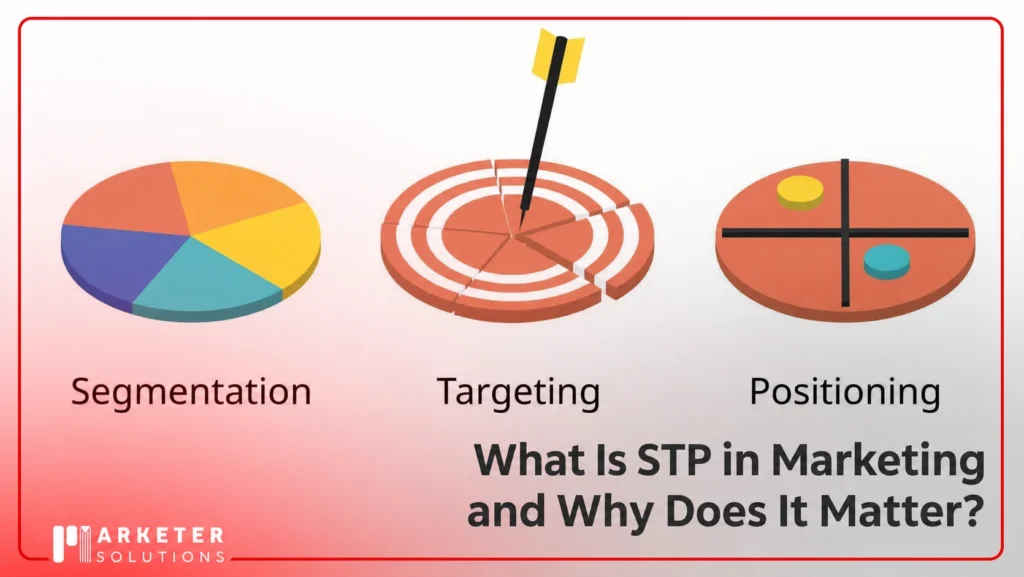
The answer to the question, “What is STP in marketing,” is that it is the framework for understanding how to build a successful marketing strategy that goes beyond just traditional advertising to reach the target audience immediately, as at the present time it is no longer enough to provide a single product, but rather it is necessary to know to whom the product is being offered and how to reach and show the brand in a place that cannot be reached, and this is what can be achieved through cooperation with Marketer, the leading company in creating marketing solutions that achieve exceptional profits for its customers. What is stp in marketing The STP model is an abbreviation for three main processes: segmentation, targeting, and positioning. The goal of this model is to direct marketing efforts to focus on the target audience, ensuring that the message reaches the right person at the right time. Therefore, the question of what is STP in marketing can be answered as digital marketing strategies Effectively, it helps companies identify the most profitable category and focus on it instead of wasting resources and budget on campaigns that do not achieve results The three basic elements of an STP strategy The STP strategy depends on three basic elements, which we will explain in detail in the following points: Segmentation: The process of dividing a market into small categories that share specific demographic, geographic, and psychographic characteristics. Targeting: Determine the most profitable segment to focus on according to the size of the market and the company’s ability to reach it. Positioning: It aims to draw a clear mental image of the brand and product in the minds of customers. Step-by-step guide to implementing STP After knowing the answer to the question: What is meant by STP?, we will discuss how this model can be applied successfully and with high accuracy, and this is what we are good at at Marketer Company, where this is done as follows: Defining the Market: Start by understanding the size of the market the company can serve. Applying segmentation criteria: Using behavioral, demographic, and geographic data to classify categories. Evaluating the attractiveness of categories: measuring the profitability of each category and its marketing cost. Choosing the segment or category: Determine the category and segment that achieves the highest return on investment. Develop a positioning strategy: to determine the competitive advantage that makes the customer choose one brand over another. Developing the marketing mix: The elements of the marketing mix, product, price, place, and promotion, must be consistent with the target segment and group. A practical example of an STP strategy To illustrate how this strategy works, we will shed light on how this is applied in practice to Marketer The best digital marketing company in Jeddah For marketing services: Division: Marketer divides the market into emerging, medium and large companies, taking into account the nature and size of the business activity and the marketing objective. Targeting: Focuses on targeting small and medium-sized companies that want to enhance their digital presence and achieve sustainable growth. Positioning: Marketer is positioned as a strategic partner that relies on collecting and analyzing data and developing customized strategies that help transform the results of the marketing campaign into measurable results. Steps to apply the STP strategy After learning what STP is in marketing, we can focus on that this strategy is implemented according to a set of clear steps to ensure that resources are not wasted, and these steps are as follows: Data Collection: Using state-of-the-art analytics tools to understand current consumer behavior. Competitor analysis: knowing where the competitor stands and exploiting the vacant space. Defining value: formulating a distinctive and unique marketing message that meets the needs of target groups. Common errors in STP implementation We answered the question: What is STP in marketing? As a result, we can realize that not implementing this strategy accurately may cost the organization its entire marketing budget. The most common mistakes when implementing it are the following: Broad targeting: Trying to satisfy all groups leads to their dissatisfaction. Ignoring behavioral data: Relying only on data such as age and gender without understanding the reason for the purchase. Weak positioning: lack of clarity in the competitive advantage that makes the customer compare you with other competitors on the basis of price. Is STP a foundation for sustainable business success? Yes, certainly, the STP model is considered the cornerstone for any client who desires sustainability and growth in the market. By defining what is STP in marketing in depth, the company can build a strong and solid relationship with its customers, as the customer feels that the product has been designed to meet his needs, which increases his loyalty to the brand and reduces the cost of acquiring new customers. Therefore, Marketer believes that sustainability begins with a good and deep understanding of the target groups before launching the campaign. The importance of the STP model in marketing The importance of using the STP model in marketing lies in its ability to improve spending efficiency and increase the profit conversion rate. We can focus on some of the reasons that highlight its importance as follows: Personalization: Allows personalized messages to be sent to customers to increase the value of their interaction. Product Development: Helps understand gaps in the market to develop a product that meets unsatisfied needs. Competitive distinction: It helps the brand find a distinctive position in the market away from price competition. Examples of the STP model in marketing After we learned about what STP is in marketing, we notice that it is applied in international companies such as Apple as a result of its importance in targeting categories accurately and helping the brand differentiate itself from competitors. This is why many international companies rely on it to help them increase rates of return on investment and increase profitability, and therefore Marketer has emerged as one of the best marketing companies that helps develop an STP model for an
Examples of swot analysis
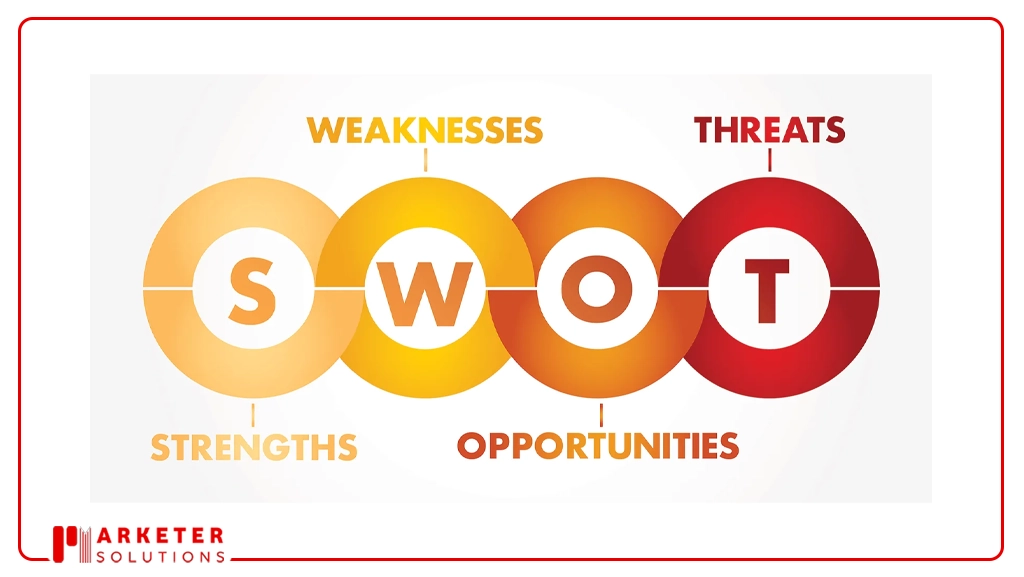
Examples of Swot analysis are one of the best means to help understand how to evaluate the current situation of any company, and build more effective and sustainable marketing plans by analyzing strengths, weaknesses, threats, and opportunities to facilitate making the right decisions, which is reflected in improving performance and enhancing the company’s competitive ability. At Marketer Solutions, we rely on Swot analysis as a necessary step when preparing various promotional strategies to support business growth, invest in available opportunities, and achieve measurable results as much as possible. What is SWOT Analysis? It is a strategic framework used to evaluate the conditions of companies and organizations by examining four basic elements: strengths, weaknesses, opportunities, and threats. Strengths and weaknesses are related to internal factors of the organization, while opportunities and threats represent external factors that cannot be directly controlled. This analysis is an important tool to rely on The best digital marketing company in Jeddah When preparing marketing plans, studying competitors, and identifying opportunities that help companies achieve growth and enhance their presence in the market. Examples of swot analysis One of the most important examples of strengths, weaknesses, opportunities and threats, or what is known as SWOT analysis, is the analysis of the global Patagonia sportswear brand, as follows: Strengths: The brand’s commitment to sustainability and high product quality. Weak points: Focus on a specific segment of the audience and based on this, its prices are higher than competitors. Opportunities: High demand for environmentally friendly products and expansion into emerging markets. Threats: Fluctuations in the global economy and intense competition in the sportswear market. The importance of SWOT analysis The importance of Swot analysis is its ability to provide companies with an organized framework for making correct decisions in addition to the following: Identify weaknesses, strengths, opportunities and threats to develop effective marketing strategies. It enables companies to exploit their strengths that distinguish them from competitors. Helps direct the company’s financial and human resources to areas of greatest impact. It makes it possible to identify potential threats in advance and create plans to confront them. It provides a comprehensive vision that helps decision-makers balance internal and external factors. Creates a common language among stakeholders in order to collectively discuss opportunities and challenges. How to conduct a SWOT analysis Swot analysis from Marketer Solutions is performed in 4 basic steps, which are as follows: Identify strengths such as team efficiency or product quality. Identify a weak point such as lack of human resources. Identify opportunities such as increased demand for the product in a specific sector. Identifying threats, which could be the entry of new competitors. After collecting these elements, they are organized into a four-part matrix that facilitates setting priorities and linking the appropriate factors and strategies to them. How do you write a SWOT analysis? The SWOT analysis for a company or brand is written as follows: Define a clear goal for the analysis before starting. Conduct comprehensive research to find out everything related to the target market and competitors. Write down strengths and weaknesses according to certain questions: What is the company good at? What needs improvement? Identify potential opportunities and threats based on analysis of target market trends. Prioritizing factors and turning them into implementable strategies. Positive aspects of SWOT analysis (strengths) Swot analysis is characterized by many positive aspects and strengths that make it among the most important strategic tools in marketing for companies, as follows: It does not require specialized expertise or expensive tools, making it available to businesses of all sizes. It provides a structured framework that identifies the internal and external factors that affect the organization and its growth. It prompts participants to look in depth at the competitive environment and market trends, in addition to current technological changes. Provides a common language that facilitates consensus building between all levels of management regarding strategic priorities. 5 examples of SWOT analysis for emerging global and local companies Examples of SWOT analysis provided via Marketer Solutions services To understand the mechanism of applying this analysis to different sectors and companies as follows: Technology startup: Strength is an excellent development team and patents, weakness is limited budget, and opportunity in market development Artificial intelligenceAnd the threat of stronger competitors entering the field. An international fashion brand: Strength is its strong reputation and customer loyalty. Weakness is its reliance on high-cost sustainable materials. The opportunity is to expand into emerging markets. The threat is the fluctuations in the global economy. Local restaurant: strength in food quality and distinct geographical location, weakness in increasing operating costs, opportunity to increase health awareness among customers, threat of rising prices of raw materials. Personal project: strength in communication and adaptation skills, weakness: lack of experience in a specific field, opportunity in emerging markets, threat: intense competition in that sector. An emerging financial services company: Strength: Technical flexibility and speed of innovation. Weakness: Limited customer base. Opportunity: Accelerating digital transformation. Threat: Changing financial legislation. The 3 most popular examples of SWOT analysis in the fields of e-commerce At Marketer Solutions, we are interested in illustrating an example of a Swot analysis for a company in the field E-commerce As follows: A store based on social media: The strength is the direct interaction with target customers, the weakness is the high dependence on a specific platform, the opportunity is the possibility of marketing through influencers, the threat is the change in the algorithms of those platforms. A store specializing in a specific product: strength in focus and specialization, weakness in limited product diversity, opportunity for geographical expansion through international shipping, threat of competitors entering at a lower price. Multi-category store: strength in variety, weakness in inventory management difficulty, opportunity partnerships with different delivery platforms, threat in changing consumer behavior. Criticisms and limitations of SWOT analysis (weak points) After we have explained through examples of SWOT analysis its strengths, we now mention the weaknesses or criticisms and limitations of this analysis as follows: One person may see a strength while another sees
The difference between internal and external marketing
The difference between internal and external marketing is one of the important concepts that helps businesses and companies build a comprehensive strategy that achieves the growth and sustainability they aspire to. While internal focuses on motivating employees and increasing their loyalty, external is concerned with attracting customers and enhancing the company’s presence in the market using different channels. When both types are integrated efficiently, marketing messages become more influential and effective, and in our company Marketer Solutions is better. An digital marketing company in Jeddah We rely on the latest promotional methods to develop a balanced plan that supports the growth of various activities, enhances the brand’s position, and achieves your goals with the utmost efficiency and confidence. What is inbound and outbound marketing? Inbound marketing is a modern method that works to attract customers by providing useful content that meets their aspirations and needs. This method depends on understanding the customer’s problem first and gradually providing the appropriate solution until reaching the purchasing stage. The importance of this approach becomes clear when you understand The difference between marketing, promotion and advertising; Internal marketing is not limited to launching direct advertising campaigns or temporary promotions, but rather represents a comprehensive marketing strategy that builds a long-term relationship with the audience. While external marketing is a traditional method in which companies push their advertising messages directly through various channels such as radio, television, and billboards, this method is based on reaching the largest possible number of people in the hope that the message will reach the target group among them. The difference between internal and external marketing The difference between internal and external marketing is evident in a number of different points, as follows: Comparison Internal marketing External marketing Direction of communication The customer is looking for the company The company is the one who reaches the customer Cost Relatively low Mostly high Focus Customer requirements and problems Product or service Speed of results It takes a long time Fast results Performance measurement Easy with specialized analysis tools Difficult many times Relationship Long distance relationship Direct fast effect Channels Blogs, email, SEO, social media. Radio, television, direct dial, billboards. The most important methods of internal marketing There are many inbound marketing methods that Marketer Solutions uses for your business; Where it depends on a precise understanding of The difference between marketing mix and promotional mix To build integrated strategies that are not limited to promotion only, but include all elements of attracting customers and turning them into success partners. The most important of these methods are the following: Blogs and educational content: useful articles are written that answer the questions of the target audience, taking into account their optimization for search engines in order to reach those searching for them. Email Marketing: We build mailing lists for interested customers and send them personalized content periodically to enhance their interaction with the business and increase their loyalty. SEOSites and their content are customized with appropriate keywords to raise their ranking in search results and increase the number of organic visits to them. Visual and audio content: represented by podcasts and educational videos, which are considered effective means of attracting different segments of the target audience. Marketing through Social media platformsContent is published that suits the nature of each platform to build an interactive community on it related to your brands and convert followers into customers. The most important methods of external marketing The most prominent external marketing methods that Marketer Solutions relies on to promote brands are as follows: Print ads: whether in newspapers or specialized magazines that the target audience already reads. Television and radio advertisements: which are considered an effective way to reach a large segment of the target audience, especially during the seasons. Paid advertisements through the Internet: such as Google ADS and social media, which actually allow many categories to be targeted precisely and not others. Billboards: which are placed in vital places and locations to ensure that they are repeatedly viewed by a large group of passers-by on a daily basis. Direct contact with potential customers: which requires careful implementation in order to avoid disturbing customers. The importance of internal and external marketing together Although the difference between internal and external marketing appears clearly in many points, combining them can give your brand a comprehensive strategy, as external helps to quickly increase awareness and reach an audience that has never heard of it before, while internal marketing works to enhance and strengthen the relationship with them, and this integration achieves a balance between the speed of results and their sustainability at the same time and makes your investment more efficient in the long term. Why is Marketer the best marketing company in the Kingdom? Marketer Solutions is distinguished by its extensive experience in marketing at both ends, whether internal or external, in the Saudi market, as it includes a specialized team capable of designing comprehensive promotional solutions that combine both types to suit the needs and requirements of each individual client. It also relies on the latest tools and techniques for analyzing performance to ensure achieving the best results, and sets the client’s requirements as the basis for every marketing strategy it designs. This approach has actually helped in achieving realistic and tangible results for clients, from increasing brand awareness to improving conversion rates and increasing returns. The most important advantages of inbound marketing Among the points that clarify the difference between internal and external marketing are the advantages that internal marketing enjoys, which are as follows: It is characterized by its low cost compared to traditional methods, making it suitable for activities with limited budgets. The ability to target the audience precisely through keywords and their interests. Building an interactive relationship with the audience through useful content. Access to a global audience that is not restricted by geography due to its reliance on Internet. The ability to measure results through analysis tools available for each channel. The most important advantages of external marketing The most
The difference between marketing, promotion and advertising
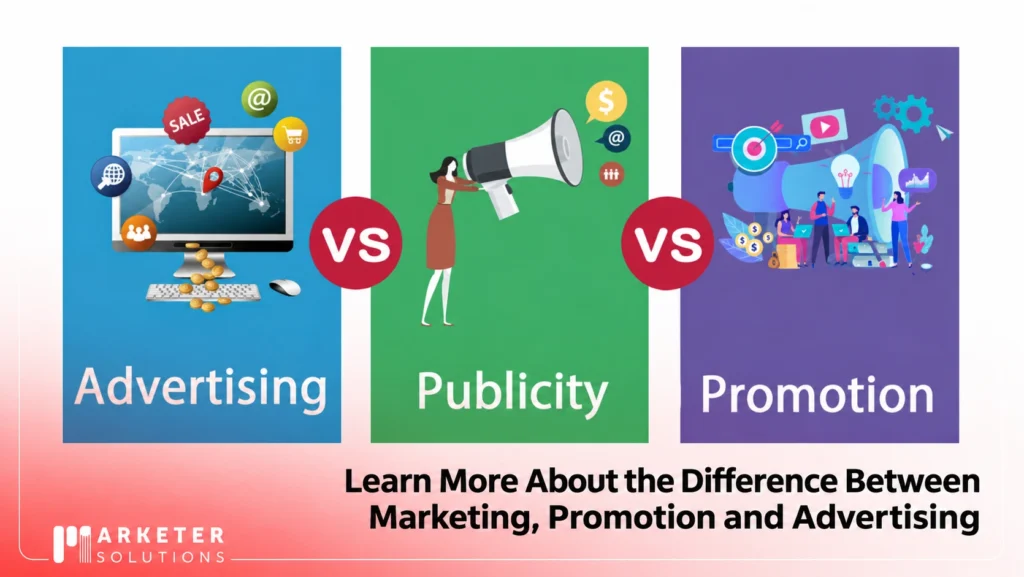
Knowing the difference between marketing, promotion and advertising is one of the constant things in the success of any project, and also knowing the difference between marketing and sales is important, as project owners and marketers who are starting out confuse these terms, but they are completely different from each other, and this confusion is not only a simple linguistic detail, but it is a major reason for the failure of marketing campaigns on which large budgets are spent. Understanding the difference and ways to use each of them is the correct starting point that helps in building the successful strategy for any organization, and each term has a stage and a tool that guarantees an integrated marketing system. What is the concept of marketing? Marketing is a large umbrella under which all other activities fall. It is a comprehensive process, starting from studying the market and target audiences, passing through the stages of developing products and services, determining appropriate prices, then choosing distribution channels, and ending with advertising. Product promotion and marketing are not limited to selling, but are concerned with understanding customer needs and meeting them in a way that achieves value for both parties. It includes multiple elements, building a commercial identity, market analysis, how to make a marketing plan in a way that serves the product, and the last thing is advertising, and therefore it is considered an advertisement. E-marketing strategies Integrated. What is the concept of advertising? Count Sponsored ads A paid message published through specific media outlets, whether television, communication platform, radio, or even search engines. It aims to reach the target audiences while delivering clear messages about the service or product. The advertisement relies on an attractive visual design and credit that attracts attention in a short time. The aim of the advertisement is to increase awareness of your brand and push audiences so that they can take specific actions, such as registering for the service, purchasing, or others. Advertisement is a small part of promotion and a means of informing audiences of the offers and the product itself. The difference between marketing, promotion and advertising Understanding the difference between marketing, promotion and advertising is through knowing some of the following elements: Comparisons Marketing Promotion Advertisement Definition A comprehensive process whose goal is to identify customer needs while providing products and services that meet those needs and achieve the organization’s goals. A set of activities that encourage customers to purchase products or even services in order to increase sales. A method used to spread a marketing message to target audiences through the media. Tools Distribution, market research, promotion, product development, pricing, and distribution. Advertisements, offers, free samples, personal selling, discounts and public relations. Billboards, television, social media, newspapers, magazines and radio. Cost Includes all costs of marketing activities. It is the least of the comprehensive marketing costs and their difference according to the methods used. It is most likely high, especially when widespread media is used for dissemination. Goal Aiming to build long-term relationships with all customers, unify market needs and achieve profits. Motivating customers to make purchasing decisions and increasing demand for purchasing products. Introducing audiences to the product and services while convincing them of them and at the same time enhancing its image. Duration of effect The duration of the effect here is long-term. Mostly short to medium. It varies according to the advertising campaign, but it is most likely short or even medium in term. Range Its scope is marketing activities, distribution, pricing and promotion. It is part of the marketing process. Part of the promotion activity. Examples A company studies customer needs, develops the product, determines its price, and at the same time chooses its distribution channels. Offering a discount of about 30% or an offer to buy one product and get another for free. Publish a television advertisement or even a social media campaign to introduce the product. The most important types of marketing and advertising There are many types of marketing according to the medium and target audiences, the most important of which are: Digital marketing through communication platforms and websites In addition Search engine optimization As well as content marketing, whose primary reliance is providing knowledge to the masses, marketing through mail and the use of marketing through influencers and content creators, and traditional marketing through radio, television and print publications. Advertisement It includes paid advertisements in search engines, display advertisements, radio and television advertisements, banners and banners in public places, and print advertisements in magazines and newspapers. Today, these types have become overlapping due to the use of modern digital tools. The difference between the elements of marketing and advertising Mentioning the difference between marketing, promotion and advertising is one of the things that explains a lot to you and at the same time ensures a good understanding of each element, so here we will mention the difference between marketing and advertising, and we can start the conversation by mentioning small details, which is that the marketing mix has basic elements called the marketing elements of product, distribution, price and promotion, and advertising differs because it has other elements, whether visual design, the media message, the target audience, and the media medium used. The fundamental difference is that marketing elements are built on a long-term strategic basis, including a complete study of the market, while advertising elements are built on a short-term operational basis to achieve rapid interaction with a specific thing or a single message. The success of advertising is measured by direct indicators of views and click-through rates, while marketing success has broader indicators of customer loyalty, marketing share, and return on investment. The impact of advertising on marketing Advertisements are an implementation tool for translating the marketing plan into a tangible reality in front of the masses. No matter how perfect the marketing strategy method is, it also needs advertisements to deliver its message to target customers. Experiences have proven that combining advertising with… Marketing plan It raises conversion rates, and
The difference between market skimming and market penetration
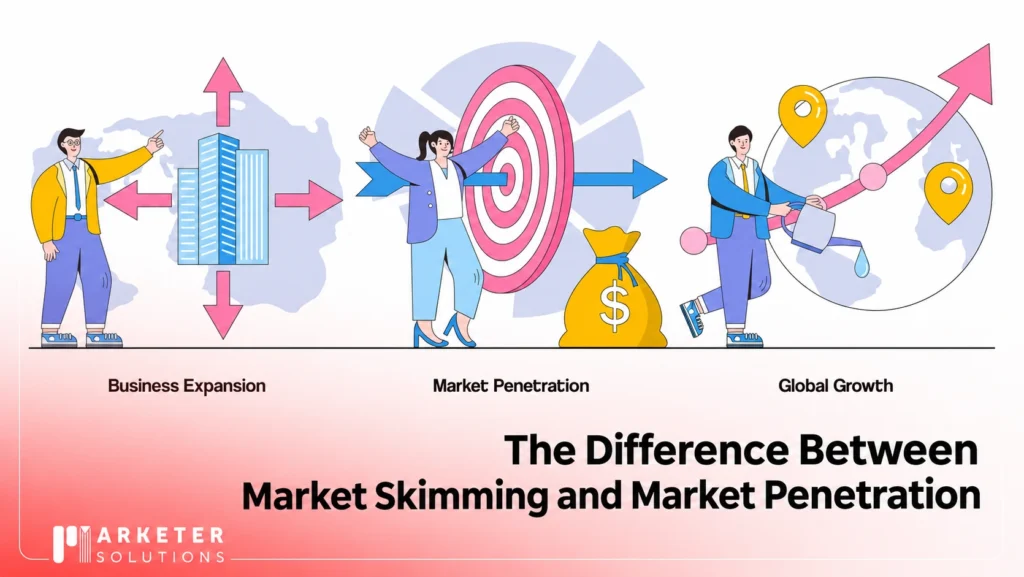
One of the important questions that many people want to know is the difference between market skimming and market penetration, as they are terms that may be somewhat strange to the ears. We can explain this by saying that they are one of the important strategies that companies follow when they introduce a new service or product in the market and the company has a business decision before them. They are two opposite models in philosophy and implementation, although both ultimately lead to achieving the highest return and ensuring continued growth. Therefore, many entrepreneurs are looking for the clear answer regarding the difference between market penetration and market skimming. What is penetration pricing? Penetration pricing strategy is one of the marketing pricing strategies that relies on introducing a product or even a service to the market at a relatively low price when compared to competitors. This aims to attract the largest possible number of customers in a short time while seizing a large market share from the first moment. Companies resort to this type of pricing when they enter a competitive market crowded with competitors or when they want to break the barriers of hesitation among consumers regarding a new brand that they have not tried. What is skimming pricing? The market skimming strategy, or what is called price skimming, involves offering the product at a high price at the first launch stage and then gradually reducing the price over time in order to attract new segments. This strategy is mostly used with those luxury and innovative products that are distinguished by the lack of competition at the launch stage. It targets the category of customers who are willing to pay the highest amounts in exchange for obtaining a product as soon as it is released. The primary goal is to achieve the highest return from the multiple price segments, before moving to the lower segment. This is what ensures that companies recover the cost of research and development significantly. Companies cost research and development dramatically and quickly. The difference between market skimming and market penetration There is a noticeable difference between the strategy of skimming the market and penetrating it, and every company can choose what suits it from the two based on a careful analysis of its target audience. This helps you define and apply it accurately The best digital marketing company in Jeddah To ensure the highest possible sales. Here is the difference in detail: Comparison Market scraping Market penetration Definition A pricing strategy that starts with a high price and then gradually decreases over time. Its primary strategy is to offer a low-priced product to quickly attract many customers. Target group Customers who are interested in modernity and quality and are willing to pay high prices. All market segments, especially price-sensitive customers. Advantages Achieving high profits at the beginning while recovering the development cost quickly. Increase sales, enhance market share and expand the customer base. Disadvantages It attracts competitors and reduces sales volume initially, thus causing an increase in price. Low profit margin at the beginning and sometimes it is difficult to raise prices. Goal Achieve the highest profits from customers who are able to pay a high price. Increasing market share and the ability to acquire a larger number of customers. When to use It is used when a new or innovative product is introduced and there is limited competition. It is used when entering a competitive market or when wanting to attract competing customers quickly. Price at launch The price at the beginning is high Here the price is low. Advantages of market skimming strategy The market skimming strategy has multiple advantages that make it an essential choice when planning… How to market a new product It targets groups that are willing to pay a higher value initially, and the most prominent of these advantages are the following: Achieving high profits in a short time by targeting customers who are willing to pay high prices. Recovering the cost of research and development, especially those innovative products that require large investments. Building a luxury mental image of the brand because the high price is associated in the minds of consumers with excellence and quality. Restricting demand initially, thus this suits the production capacity and gives the company time to expand production lines. Advantages of market penetration strategy The difference between market skimming and market penetration lies in the advantages and disadvantages that each strategy has, the methods of adopting it, and when it is used, in addition to other aspects of the difference. Here are the advantages of the market penetration strategy: Capturing the largest market share due to the attractiveness of the low price to consumers. Build a broad customer base from the beginning, which enhances brand loyalty. Deter new competitors, as low price makes it less attractive for new competitors to enter the market. Achieving economies of scale as sales increase, cost decreases. Rapid spread of the product. This helps spread the product through word-of-mouth marketing among consumers. Disadvantages of market skimming and market penetration The two strategies, market skimming and market penetration, each have their own challenges and drawbacks. We find that one of the disadvantages of market skimming is that it loses a large segment of customers looking for a reasonable price in the early stages, and thus opens the door to competitors who offer cheap price alternatives. One of the disadvantages of penetrating the market is the weak profit margin from the early stages, and it may take a long time to achieve financial equilibrium. The low price for consumers is linked to low quality, and the difficult thing is to raise prices without customers feeling dissatisfied. When to use a market skimming strategy? The market skimming strategy is an ideal choice to use in the following times, especially when combined and applied within digital marketing strategies To ensure quick and targeted access to the right audience: When an innovative product is launched that has no direct competitor in
The difference between marketing mix and promotional mix
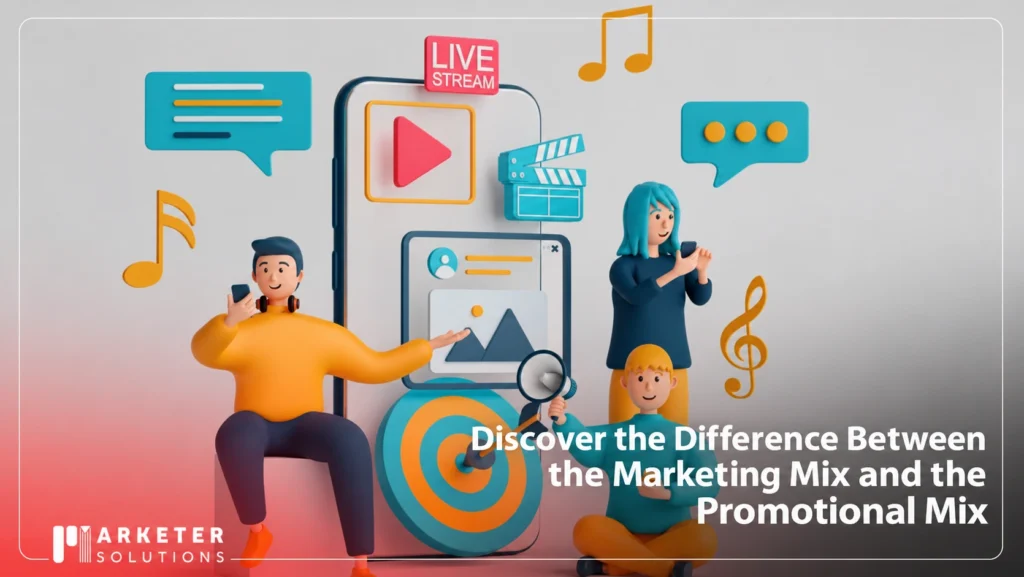
In a world full of trade and business, there is a need to know marketing terminology as a cornerstone for the success of the project, and specifically to know the difference between the marketing mix and the promotional mix, as some consider that they are two sides of the same coin, but there are some structural and fundamental differences that determine the role of each in the growth strategy. In this article, we together explain the details of the difference between them and how they can be integrated together to achieve the best marketing result, while highlighting the role of Marketer Company as a strategic partner in that field. Definition of marketing mix and promotional mix We can clarify the difference between the marketing mix and the promotional mix in terms of definition in the following points: Marketing Mix: It is a framework that brings together multiple tools and decisions taken by an organization to influence the demand for products or services in the specific market and expresses the complete picture of how to provide value to the customer. Promotional mix: It is a set of communication tools that an organization uses to deliver its message to the target audience, meaning that promotion is the voice of the brand. The difference between marketing mix and promotional mix The difference between the marketing mix and the promotional mix lies in scope and comprehensiveness, and this can be explained in detail through the following table: Comparison Marketing mix Promotional mix Definition A set of tools and decisions affecting demand A set of communication tools to clarify the company’s marketing message Range A more general and comprehensive framework that clarifies the general strategic framework Part of the marketing mix depends on communication and communication Items Product, price, promotion, place Public relations, advertising, direct marketing, personal selling Goal Achieving the company’s marketing goals such as increasing sales Persuade, inform and remind the public about products and services Focus Creating distinctive value and providing it to the customer Delivering value to customers and communicating with them about it Objectives of the promotional mix After clarifying the difference between the marketing mix and the promotional mix, we can focus on the objectives of the promotional mix, which include several aspects that work together to grow the business, most notably the following: Creating awareness: introducing the target group to the product or brand in the market. Arousing interest: providing information that makes the customer want to know more about products and services. Stimulating desire: highlighting the product’s unique features that make it the best choice among customers. Making a purchase decision: Prompting a customer and converting their interest into an actual purchase or service subscription. Building loyalty: Maintaining continuous communication with customers to ensure continued loyalty to the organization. Factors affecting the choice of promotional mix When choosing promotional tools, this process must be subject to several factors, namely: Nature of the market: knowing the characteristics of the target group, their ages, their interests, and determining the most appropriate communication channel. Product life cycle: The product at the beginning of its launch needs intensive promotion, while in the maturity stage, the promotion process focuses on loyalty. Budget: Determine the company’s available budget. Will it rely on television advertisements or will the focus be on marketing through… Social media. Nature of the product: Complex technical goods may require personal selling or a demonstration, while consumer goods may require traditional advertising. How is the marketing mix done? We learned about the difference between the marketing mix and the promotional mix, and now we can address the emphasis that the marketing mix is prepared through careful study of the nature of the market and the target audience, and the marketing mix is prepared as follows: You start by developing a product that meets your audience’s real needs. Then determine the price that reflects the value of the product and is appropriate for purchasing power. Then choose the place or distribution channel that ensures the delivery of the product to the public. Finally, the promotional strategy that conveys the organization’s marketing message is developed. It must be noted that Marketer helps prepare the marketing and promotional mix for organizations to help them reach the target audience faster. What is the marketing mix for services? When moving from selling tangible goods to providing services, the marketing mix expands to contain three additional elements besides product, price, place, and promotion, becoming 7PS instead of 4PS: The human element: The employee who provides the service, his behavior and efficiency are a major part of the quality of service. Process: The steps and procedures that the customer goes through to obtain the service. Natural environment: appearances that give an impression of the quality of service, such as the interface of the website or the décor of the office or company. What are the tools of the promotional mix? The tools that the company can use within the framework of the promotional strategy are varied to include the main elements of the promotional mix, such as advertising, whether via the Internet or traditional means, public relations, sales promotion such as offers and discounts, direct marketing, whether through text messages or EmailAnd personal selling. Is the promotional mix part of the marketing mix? Yes, the promotional mix is a major part of the elements of the marketing mix and it is one of the main components. The marketing mix cannot be complete without the use of a promotion strategy, just as promotion cannot succeed without a product at a price and an effective distribution channel, so the relationship between them is the relationship between the part and the whole, as promotion works as an executive tool within the marketing strategy. The best digital marketing company in Saudi Arabia If you want to know the difference between the marketing mix and the promotional mix, Marketer is considered The best digital marketing company in Saudi ArabiaIt is distinguished by its high ability to formulate a comprehensive and
Digital marketing agency
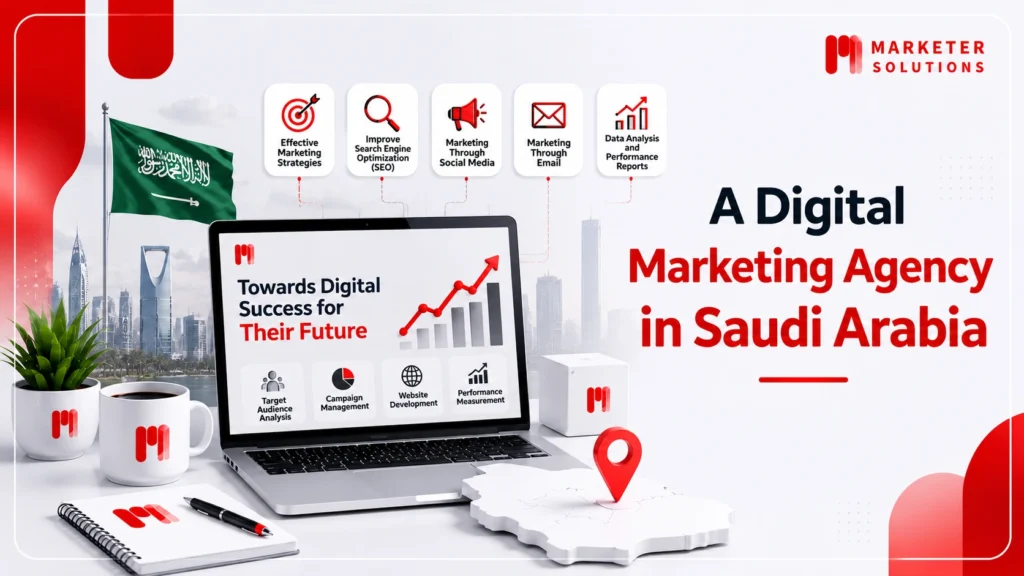
A digital marketing agency is one of the important elements that companies rely on to build a strong digital presence and enhance their position in the markets, and here it is presented An digital marketing company in Riyadh Marketer is comprehensive and integrated marketing solutions that help reach the target audience in a professional and innovative manner, as a result of the continuous development in the digital market, which has become dependent on thoughtful and effective plans and strategies that achieve growth and increase the chances of success, and this is what Marketer is keen to provide. Digital marketing agency A digital marketing agency plays an important and pivotal role in helping the business build an innovative and effective strategy that enhances the business’s digital presence, and this is what Marketer offers, as it works to provide advanced and creative marketing solutions that rely on analyzing customer behavior and studying the market well, and helping the company and the brand improve its reach to the target groups, to achieve marketing results that support business growth on a regular basis. What is the best digital marketing agency in Saudi Arabia? Marketer is the best digital marketing agency in Saudi Arabia, as it provides innovative and creative solutions that help companies build a strong digital presence. The company relies on modern strategies that include: Search Engine Optimization (SEO)Managing paid and sponsored advertising campaigns, and formulating professional and useful content, which contributes to achieving effective results and increases the possibility of the company reaching its target audience. Therefore, relying on Marketer will provide the company with many advantages, including a deep understanding of the market’s needs as a key factor for the success of marketing plans and achieving the desired growth. The importance of digital marketing Relying on a digital marketing agency is essential to the company’s success within the modern market, as it contributes to developing marketing plans and achieving results that support business growth, so we can focus on What is digital marketing and its importance In the following points: The company is widespread enough to attract many potential customers. The cost of the methods and tools used is lower compared to traditional marketing methods. Through it, the results of the marketing campaign can be accurately measured and improved. Communicate and interact directly with customers to answer their questions and inquiries. It contributes to enhancing the organization’s digital presence and increasing brand awareness. It achieves sustainable growth and supports increased competitive opportunity within the market. The role of a digital marketing agency A digital marketing agency plays a major role in supporting the growth of companies, achieving their goals, and expanding the scope of their business, because of their ability to innovate and continuously develop various marketing strategies based on long experience in the field of digital marketing. It also relies on a set of modern technologies and tools that help it analyze data and measure results accurately. Digital marketing agency services A digital marketing agency provides a large number of services that help companies enhance their digital presence, as it relies on providing services that meet the needs of all activities, including the following: Advertising campaign management Paid on various platforms. Search engine optimization (SEO) to enhance the appearance of websites and online stores in the first results. Writing marketing content Professional, innovative and useful. Managing social media accounts To enhance interaction with the audience. Design a successful and innovative visual identity. Preparing reports and analyzing the performance of the marketing campaign to develop it. Building Marketing plan Specialized in achieving business objectives. How to choose a digital marketing agency A digital marketing agency is considered a key element in the success of a business, so when choosing a suitable agency, you must focus on a set of clear criteria, which are the following: Her experience in the field must be confirmed and samples of previous work must be requested. To be distinguished by a specialized, skilled and diverse team in designing advertising campaigns. Taking into account the cost of the service provided by the agency. The agency should be flexible enough to be contacted at any time. Review the opinions of previous clients and their evaluations of the agency’s services. Elements that characterize a successful agency To ensure that a digital marketing agency is innovative and successful, it must focus on a set of elements that reflect its efficiency and ability to achieve effective results, and they are: The marketing agency has a clear vision and strategy about market objectives. Its reliance on modern tools and technologies in the field of digital marketing. Its great potential and ability to analyze data and use it in decision-making. Providing many diverse services such as managing social media accounts. The agency has a team that can develop well-planned and thoughtful strategies. Its ability to provide ongoing consultations to the client as a strategic partner. The impact of digital transformation on business Digital transformation has contributed to changing the business environment through the emergence of many modern names and activities, such as replacing old marketing methods with modern means and channels that help target specific groups at lower costs. As a result, digital transformation has affected business positively, and this can be explained in the following points: Expanding the company’s reach locally and globally. Enhancing the ability to analyze marketing campaign data and make accurate decisions. Improving the customer experience through fast digital services. Reducing time and effort in completing daily tasks. Support continued business growth and long-term sustainability. Low operational costs compared to other methods. Strategies to increase brand awareness In the era of digital transformation, e-marketing has become a major and indispensable tool for enhancing brand awareness and attracting a large number of potential customers. As a result, many effective strategies have emerged that help differentiate the brand, the most notable of which are the following: Social media marketing It is considered one of the most powerful brand promotion tools, and can be achieved through the use of platforms Instagram
digital marketing strategies

E-marketing strategies are considered one of the most important tools that companies rely on nowadays to reach target customers and achieve more effective marketing results in light of digital transformation. With the diversity of digital tools used, choosing an appropriate strategy has become a major factor in the success of business activity, and by relying on Marketer’s experience. The best digital marketing company in Riyadh Comprehensive marketing plans can be built that help enhance the organization’s digital presence and achieve its business goals. digital marketing strategies E-marketing strategies are comprehensive plans that seek to reach the target audience and increase the company’s and brand’s sales through the Internet. This process includes careful analysis of the business objectives, the nature of the work, and a good study of the target market, then employing various e-marketing tools and channels to achieve the best return on investment. Types of digital marketing E-marketing strategies are implemented through the use of digital channels to promote products and services, and include multiple types that integrate to achieve the brand’s goal, which are as follows: Search engine marketing Marketing via Search engine optimization Among the types of marketing, the goal is to raise the website or store in Google search results to be the first option that appears in front of customers. Paid advertising marketing It is paid in cash for every click the advertisement receives, and one of the most famous platforms is Google Ads. Social media marketing Various social media platforms such as Facebook, Instagram, TikTok, and YouTube are used to build a strong relationship with the target audience and increase brand awareness. Content marketing In Types of content marketing The focus is on creating and distributing meaningful and valuable content for the target audience, and publishing it in articles and blogs to build trust and awareness of the brand. Video marketing Using other videos to promote the brand, products, and company services to increase awareness, such as creating short ads on the YouTube platform. Mobile marketing It is a marketing activity that focuses on reaching the target audience through smartphones by improving the website design to suit phone screen sizes or marketing through text messages. Affiliate marketing In this type, benefit is exchanged, where a group of individuals is given the opportunity to market the brand in exchange for a financial reward. Influencer marketing Here the strategy depends on cooperation with well-known personalities who have influence on social media platforms and promote the brand’s services and products. Marketing with artificial intelligence Artificial intelligence tools and data analysis are used to automate various marketing tasks, and work to improve customer experience, such as instantly responding to them using private messages. Social media marketing It is considered Marketing on social media It is one of the most important e-marketing strategies because it depends on using various social media platforms such as Facebook, Instagram, and the like to build a strong relationship with the target audience and increase their awareness of the brand. Here, the matter is not limited only to publishing, but rather includes building an integrated community around the brand, because it is possible to reach many users and interact with them directly, as it is the fastest in publishing content, building real awareness of the brand, and collecting customer opinions through continuous communication with them. The importance of digital marketing The importance of using digital marketing strategies to promote the company’s products and services can be summarized in the following points: Reach the largest possible number of target audience. Achieving direct interaction and communication with customers. It provides many digital tools that help analyze data accurately. The cost of digital marketing is lower compared to traditional marketing and is more effective. Flexible and easy to adapt to changes in the market and different customer interests. Through the use of modern technologies and tools such as artificial intelligence AI The interests of the target audience can be identified. Enhancing credibility and trust between the brand and customers by providing transparent and clear content. How to build a successful e-marketing strategy from scratch? E-marketing strategies must be prepared well and thoughtfully to link them clearly to the organization’s strategic objectives. In the following points we highlight the steps for developing a digital marketing strategy: Setting the goal: The goal to be achieved from the marketing campaign must be determined, with measurable and flexible goals set, specific to a time frame, and realistic. Target audience analysis: By identifying precise details such as age, geographic location, challenges, interests, and platforms that are used to prepare more effective marketing messages. Competitor study: By identifying who your main competitor is in the market and studying their strategies, then identifying opportunities to exploit them. Choosing the appropriate marketing channel: by identifying the channel in which the target audience is effectively located, and starting to prepare innovative and creative ideas and plans to target them. Determine the necessary marketing budget: based on the objectives and stage of growth of the marketing campaign, with an emphasis on dividing the budget between different marketing channels according to priorities. Implementing the campaign: creatively through good planning and skillful implementation to obtain distinctive results. Content formulation: Creating and producing high-quality content, drafting strong advertising texts, and preparing innovative, professional designs that reflect the brand’s identity. Measuring results and working to improve them: The e-marketing process is continuous, capable of being measured and improved, so key performance indicators must be monitored periodically, data analyzed, and the strategy adjusted accordingly. The most important elements of the digital marketing plan Must be available Marketing plan It includes a set of important elements to ensure that it is a good, well-planned marketing plan. These elements are as follows: Defining the market: The target groups of the marketing campaign must be determined taking into account other demographic factors. Market study: One of the most prominent and important elements of the marketing plan. It must be a priority to ensure an innovative marketing campaign. Business objectives: A marketing plan must